R&D
Raw Material Overview
- Approved as an MFDS Individually Recognized Ingredient (No. 2025-33)
- Greenstore Ingredient Distribution
- May help improve bronchial conditions (e.g., cough, phlegm)
- Human clinical trials confirmed improvements in allergic bronchial inflammation, chronic inflammatory status, and pathological indicators
| Material Name | Chrysanthemum & Ecklonia Cava Extract Complex |
|---|---|
| Materials | Chrysanthemum indicum (Part Used: Flower), Ecklonia cava (Part Used: Whole) |
| Dosage | 700 mg/day (as Kamguk-Gamtae Extract |
| Functionality | May help improve bronchial conditions Marker |
| Components | ① Luteolin-7-glucoside ② Dieckol |
| Human Clinical Trial Duration | 12 weeks |
-
 Test Material
Chrysanthemum & Ecklonia Cava Extract Complex
-
 Study Design
Multi-center, randomized, double-blind, placebo-controlled
-
 Intake Period & Dosage
12 weeks
(Breathless, Cough, and Sputum Scale)
- A survey tool used to evaluate the primary respiratory symptoms of breathlessness, cough, and sputum.
- An objective indicator used to assess symptoms of acute exacerbation in chronic bronchitis.
- Consists of 4 items scored from 0 to 4, where a higher score indicates more severe symptoms.
- A larger decrease in the score is interpreted as a greater symptom relief effect.
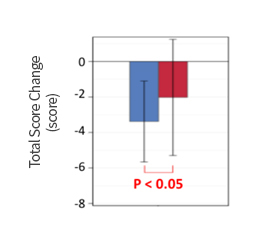
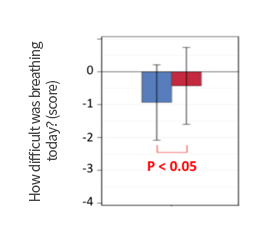
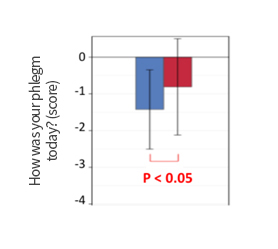
- Test group
- Control group
while the control group showed a decrease of 2.02±3.27 points, revealing a statistically significant difference between the groups.
In the analysis of the Breathing score change, the test group showed a decrease of 0.94±1.16 points,
and the control group showed a decrease of 0.46±1.11 points, with a statistically significant difference between the groups.
In the analysis of the Sputum score change, the test group showed a decrease of 1.02±1.01 points,
compared to the control group's decrease of 0.79±1.26 points, showing a statistically significant difference between the groups.
(Visual Analogue Scale)
- A subjective assessment tool for cough, sputum, and dyspnea (or chest tightness).
- A method where the subject marks their perceived level of discomfort on a 0–100mm line.
- A higher score indicates more severe symptoms, and a larger decrease in the score is interpreted as a greater symptom relief effect.
(Forced Expired Volume in one second /
Pulmonary Function Test)
- A representative pulmonary function test (PFT) indicator for quantitatively assessing respiratory function.
- A method measuring the volume of air exhaled in the first second after a maximal inhalation.
- A larger increase in the score is interpreted as a greater symptom relief effect.
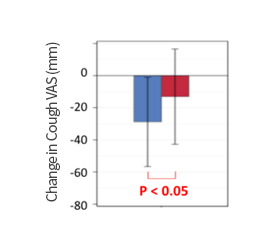
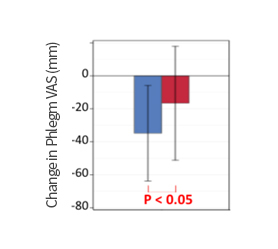
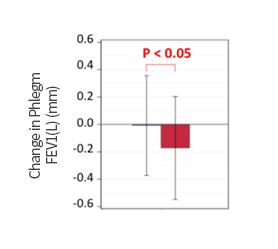
- Test group
- Control group
compared to a 13.07±29.67 mm reduction in the control group, confirming a statistically significant difference between the groups.
*Analysis of the change in Phlegm VAS showed a reduction of 34.83±28.99 mm in the treatment group,
compared to a 16.60±34.61 mm reduction in the control group, confirming a statistically significant difference between the groups.
*In the pulmonary function test, analysis of the change in FEV1 (Forced Expiratory Volume in 1 second) showed a reduction of 0.01±0.36 L in the treatment group,
compared to a 0.17±0.38 L reduction in the control group, confirming a statistically significant difference between the groups.
(According to the MFDS Guideline for Evaluating Respiratory Health Functionality)
| Category | Chrysanthemum & Ecklonia Cava Extract Complex |
||
|---|---|---|---|
| Inflammatory Markers | Improvement of Allergic Inflammation in Bronchi | ○ | |
| Improvement of Chronic Inflammatory State | ○ | ||
| Improvement of Antioxidant Capacity in Bronchi (NO) | ○ | ||
| Pathological Indicators | Improvement of Muscle Contraction Level | ○ | |
| Improvement of Mucus Hypersecretion | ○ | ||
| Clinical Indicators | BCSS Questionnaire Assessmen | Total Score | ○ |
| Phlegm | ○ | ||
| Dyspnea | ○ | ||
| VAS Questionnaire Assessment | Cough | ○ | |
| Phlegm | ○ | ||
| Respiratory Function Test s (Forced Expiratory Volume in 1 second (FEV1)) |
○ | ||
-
Test Substance
Chrysanthemum & Ecklonia Cava Extract Complex
-
Study Design
PMA-induced lung epithelial cell (A549) model
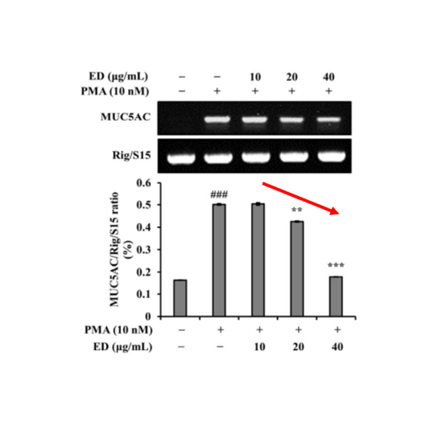
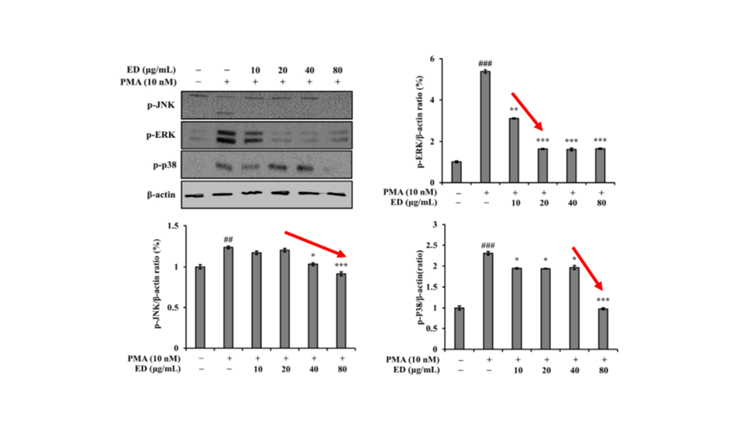
with a particularly potent inhibitory effect observed at 40µg/mL.
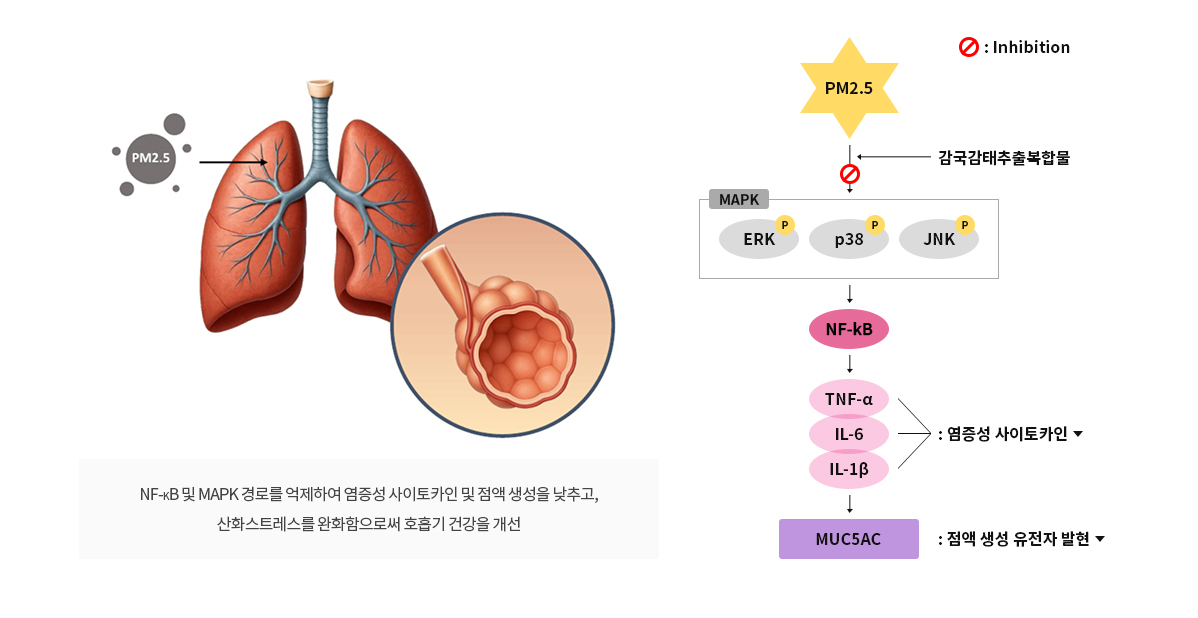
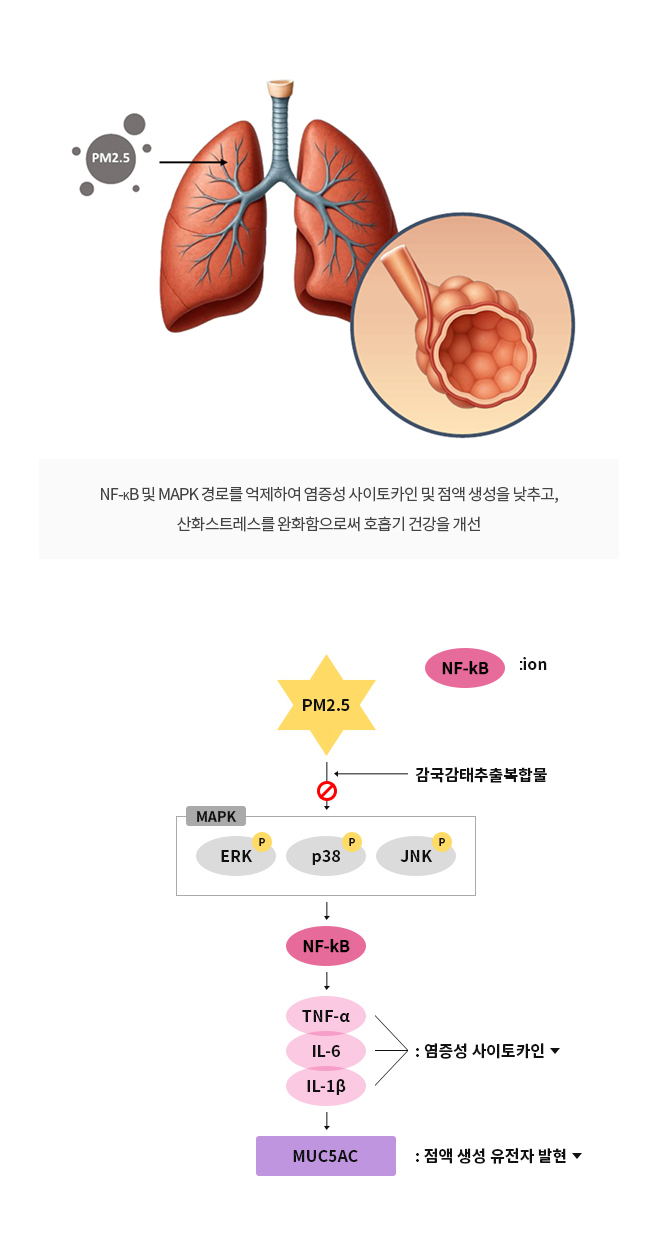
*The Chrysanthemum & Ecklonia Cava Extract Complex (ED) significantly inhibited the PMA-activated phosphorylation of p-ERK, p-JNK, and p-p38.
*It was demonstrated that the Chrysanthemum & Ecklonia Cava Extract Complex inhibits the expression of MUC5AC,
the major gene for mucus production, by blocking the activation of the MAPK pathway induced by PMA.
-
Test Substance
Chrysanthemum & Ecklonia Cava Extract Complex
-
Study Design
Treatment Group: Oral administration of ED (Chrysanthemum & Ecklonia Cava Extract Complex, 300mg/kg)
Positive Control Group: Oral administration of Bronpass* (300mg/kg)
Negative Control Group: Oral administration of DW (Distilled Water)
*Bronpass = A pharmaceutical drug for acute bronchitis

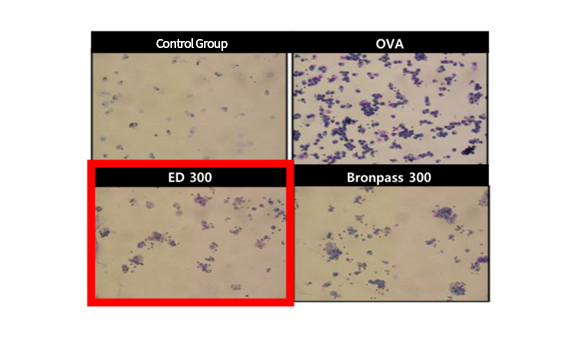
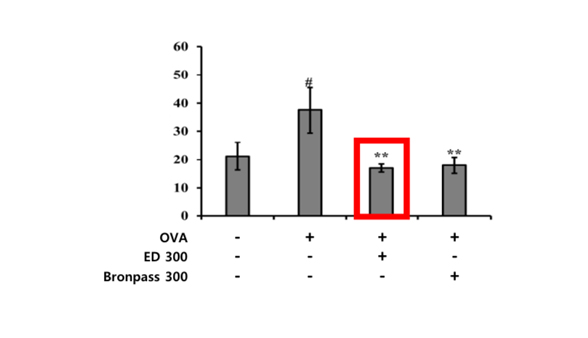
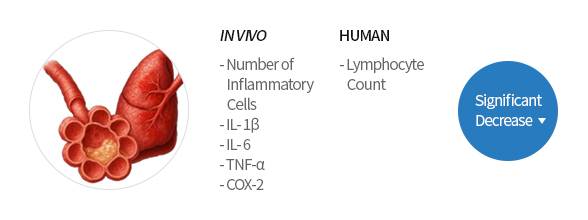
However, the number of inflammatory cells was reduced in the group administered with the Chrysanthemum & Ecklonia Cava Extract Complex (ED).
*Quantitative analysis revealed that the administration of the Chrysanthemum & Ecklonia Cava Extract Complex (ED)
after OVA induction decreased the number of inflammatory cells, demonstrating an effect similar to that of the positive control group.
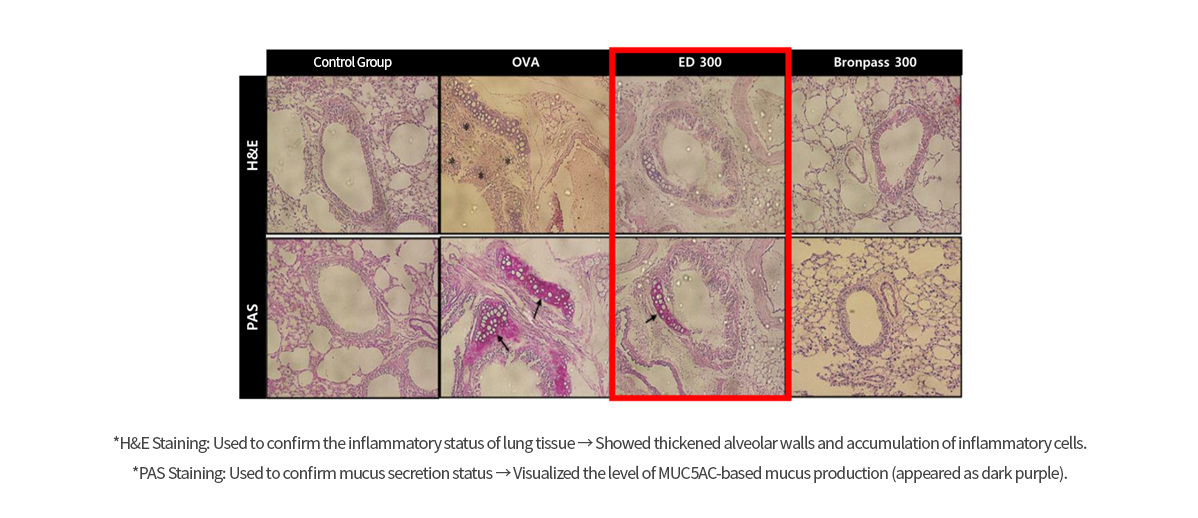
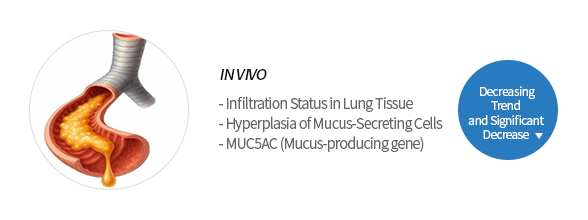
In contrast, the group administered with the Chrysanthemum & Ecklonia Cava Extract Complex (ED) showed preserved tissue structure and a reduced pattern of inflammatory cell infiltration.
*The PAS staining results confirmed that the OVA-treated group was stained dark purple due to mucus accumulation.
In contrast, the group administered with the Chrysanthemum & Ecklonia Cava Extract Complex (ED) showed a distinct pattern of suppressed mucus secretion.
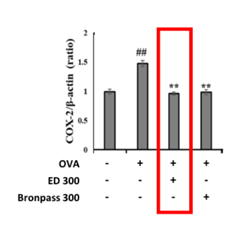
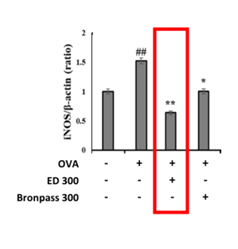
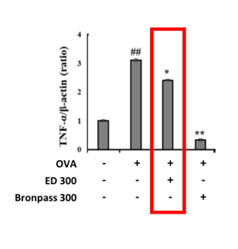
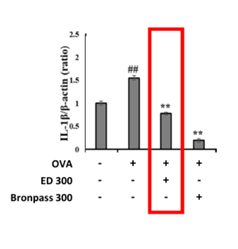
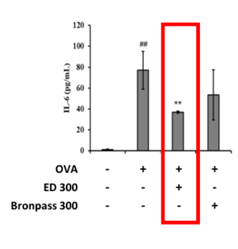
- Analysis of inflammation-related gene expression in lung tissue confirmed that the expression of COX-2, iNOS, TNF-α, and IL-1β was significantly increased in the OVA-treated group. Administration of the Chrysanthemum & Ecklonia Cava Extract Complex (ED) was confirmed to significantly suppress this inflammatory gene expression.
- Measurement of serum IL-6 levels by ELISA confirmed that the IL-6 level was significantly lower in the group administered with the Chrysanthemum & Ecklonia Cava Extract Complex (ED).
- Overall, the effects were similar to those of the positive control group, and for some factors, the effects were even superior.
-
Test Substance
Chrysanthemum & Ecklonia Cava Extract Complex
-
Study Design
*Particulate Matter (PM2.5)-induced lung inflammation BALB/c mouse model
Treatment Group: Oral administration of ED (Chrysanthemum & Ecklonia Cava Extract Complex, 300mg/kg)
*Positive Control Group: Oral administration of Bronpass* (300mg/kg)
*Negative Control Group: Oral administration of DW (Distilled Water)
*Bronpass = A pharmaceutical drug for acute bronchitis

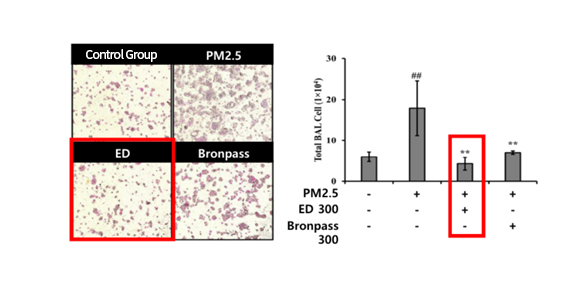
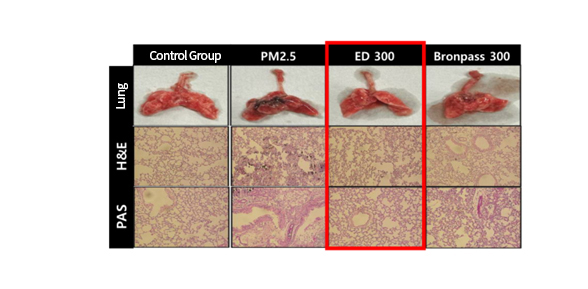
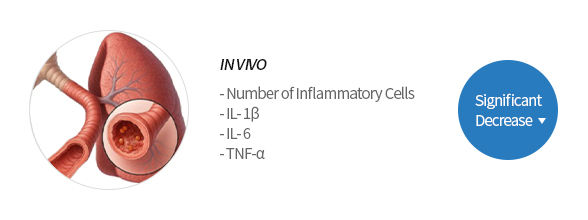
In the group administered with the Chrysanthemum & Ecklonia Cava Extract Complex (ED),
the inflammatory cell count was not only significantly decreased but also showed an effect superior to that of the positive control group.
*Histological analysis revealed that the PM2.5-treated group exhibited lung tissue damage, inflammatory cell infiltration, and mucus hypersecretion.
In contrast, the group administered with the Chrysanthemum & Ecklonia Cava Extract Complex (ED) showed preserved tissue structure,
and inflammatory responses and mucus production were markedly suppressed.
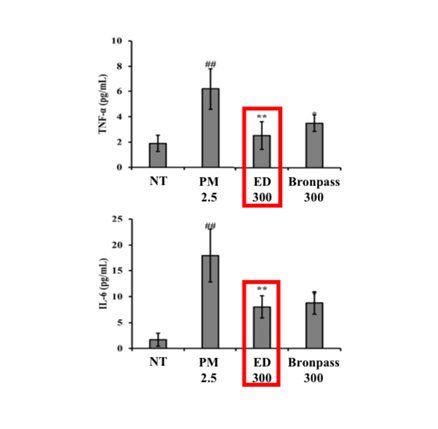
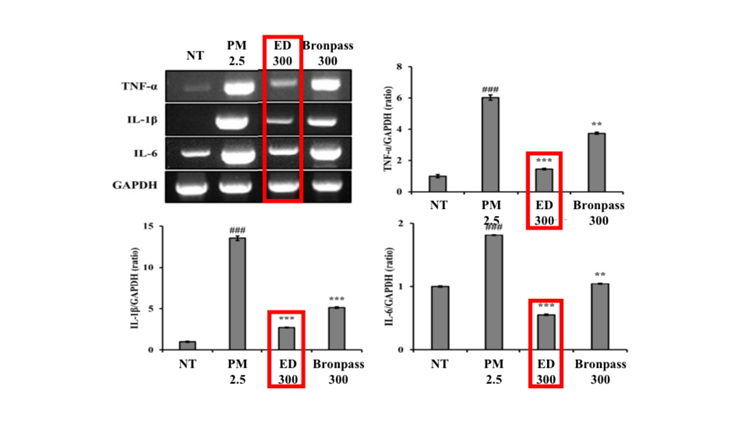
Upon administration of the Chrysanthemum & Ecklonia Cava Extract Complex (ED), both indicators were significantly decreased.
*Analysis of inflammatory gene expression in lung tissue showed that the expression of TNF-α, IL-1β, and IL-6 was greatly increased in the PM2.5-treated group.
However, in the group administered with the Chrysanthemum & Ecklonia Cava Extract Complex (ED), all these indicators were confirmed to be significantly suppressed.
-
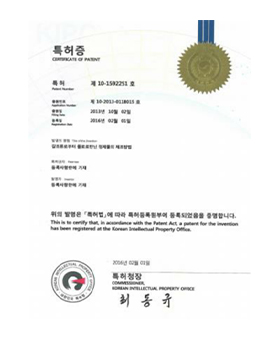
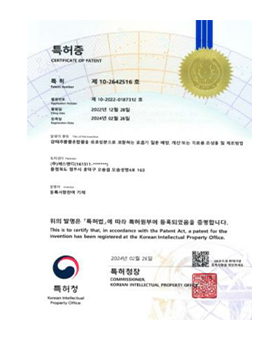
Korea Registration

-
Korea Registration
-
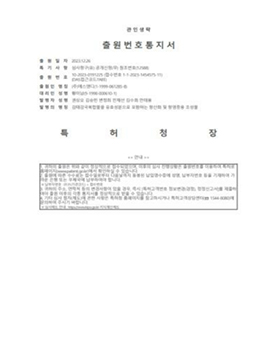
Korea Application
-
ED Formula, a Complex of Ecklonia cava and Chrysanthemum indicum, Ameliorates Airway Inflammation in Lipopolysaccharide-Stimulated RAW Macrophages and Ovalbumin-Induced Asthma Mouse Model
Pharmaceuticals 2023, 16, 1185.
-
Effect of E. cava and C. indicum Complex Extract on Phorbol 12-Myristate 13-Acetate (PMA)-Stimulated Inflammatory Response in Human Pulmonary Epithelial Cells and ParticulateMatter (PM) 2.5 -Induced Pulmonary Inflammation in Mice
Pharmaceutics 2023, 15, 2621.
-
Ecklonia cava-Hizikia fusiformis complex extract alleviates inflammation in human lung epithelia
J Plant Biotechnol (2022) 49:90-98
-
Antioxidant and Anti-inflammatory Activities of Chrysanthemum indicum Extracts with Different Ethanol Concentrations
KOREAN J. FOOD SCI. TECHNOL. Vol. 53, No. 4, pp. 416~422 (2021)
-
Effects of Inhibiting Glycoprotein MUC5AC by Seaweed Ecklonia cava Extract in human Airway Epithelial Cells
Biomedical Science Letters 2021, 27(4): 334~339